
Supreme Court Upholds Laws on Transgender Athletes in Sports
The Supreme Court's recent ruling affects the participation of transgender athletes in girls' sports. This decision has drawn varied reactions from advocates and athletes. (sources: foxnews, nytimes)
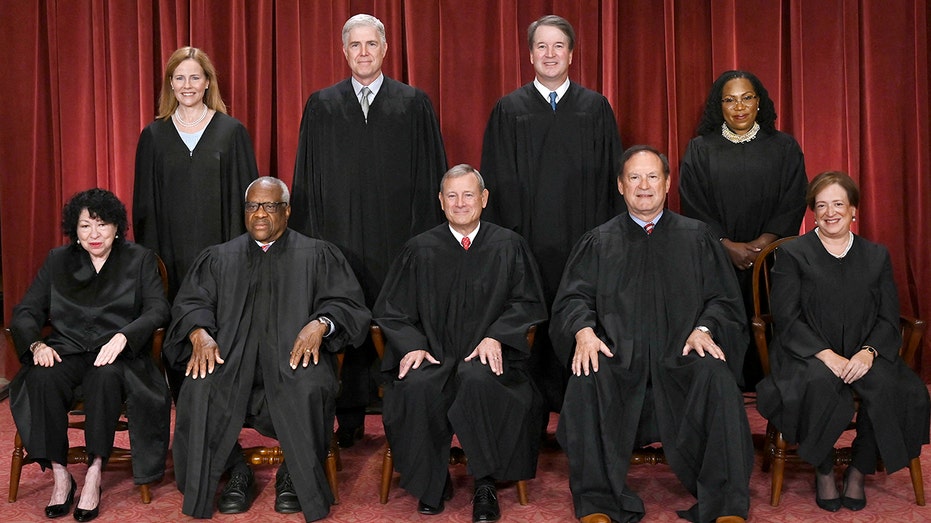
The Supreme Court upheld state laws in West Virginia and Idaho that restrict transgender athletes from competing in girls' sports. Brooke Slusser, an athlete involved in a related case, described the ruling as a significant victory for female athletes.
- The Supreme Court upheld laws in West Virginia and Idaho that block transgender athletes from participating in girls' sports.
- Brooke Slusser, who contested a trans athlete's participation at San Jose State, praised the ruling as a major win for female athletes.
- The ruling is part of a broader trend of legal challenges regarding transgender athletes in sports.
Why it matters
The ruling has implications for the ongoing debate over fairness in women's sports and the rights of transgender athletes.
↓ Congress can act on this
7 bills on this issue are moving right now — and the most active one is H.R.28: Protection of Women and Girls in Sports Act of 2025.
H.R.28 · 119th Congress
Protection of Women and Girls in Sports Act of 2025
Where do you stand on this bill?
Takes about 60 seconds
About this bill
What H.R.28 actually does
This story is about We were forced to compete against a male. This bill would amend Title IX athletics rules to define sex based on reproductive biology and genetics at birth.
If passed, it would:
- amend Title IX athletics rules to define sex based on reproductive biology and genetics at birth • make it a Title IX violation for covered school programs to allow participation contrary to that definition.
6 other bills moving on this issue
Take action on any of them individually.
This story is about We were forced to compete against a male. This bill would change federal eligibility rules for certified amateur-sports governing bodies.
If passed, it would
- change federal eligibility rules for certified amateur-sports governing bodies • set a federal biological-sex standard for female-designated amateur competitions.
This story is about We were forced to compete against a male. This bill would create a nationwide Title IX rule for federally funded school athletics based on reproductive biology and genetics at birth.
If passed, it would
- create a nationwide Title IX rule for federally funded school athletics based on reproductive biology and genetics at • prohibit covered school programs from allowing participation contrary to that rule.
This story is about We were forced to compete against a male. This bill would require elementary schools, secondary schools, and colleges to ensure “biological fairness” in women’s sports as a.
If passed, it would
- require elementary schools, secondary schools, and colleges to ensure “biological fairness” in women’s sports as a • give Congress another active vehicle for responding to the same participation dispute highlighted in the cluster.
This story is about We were forced to compete against a male. This bill would require certified national governing bodies to bar persons of the male sex from female-designated amateur competitions.
If passed, it would
- require certified national governing bodies to bar persons of the male sex from female-designated amateur competitions • apply a federal definition to women’s/girls’ amateur sports categories.
This story is about We were forced to compete against a male. This bill would prohibit discrimination based on sex, sexual orientation, or gender identity in federally funded programs and other.
If passed, it would
- prohibit discrimination based on sex, sexual orientation, or gender identity in federally funded programs and other • expand federal civil-rights protections affecting school and education disputes.
This story is about We were forced to compete against a male. This bill would add federal statutory definitions of “sex,” “male,” and “female” for interpreting Acts of Congress and federal regulations.
If passed, it would
- add federal statutory definitions of “sex,” “male,” and “female” for interpreting Acts of Congress and federal • affect future agency and court disputes that turn on sex-based categories.