
Israel orders military strikes in Beirut amid conflict with Hezbollah
Israel's government has ordered military strikes in southern Beirut while U.S. President Donald Trump reports a potential de-escalation in hostilities. The situation remains fluid as both sides navigate ongoing tensions. (sources: france24, pbs, bbc, nbcnews, reuters)
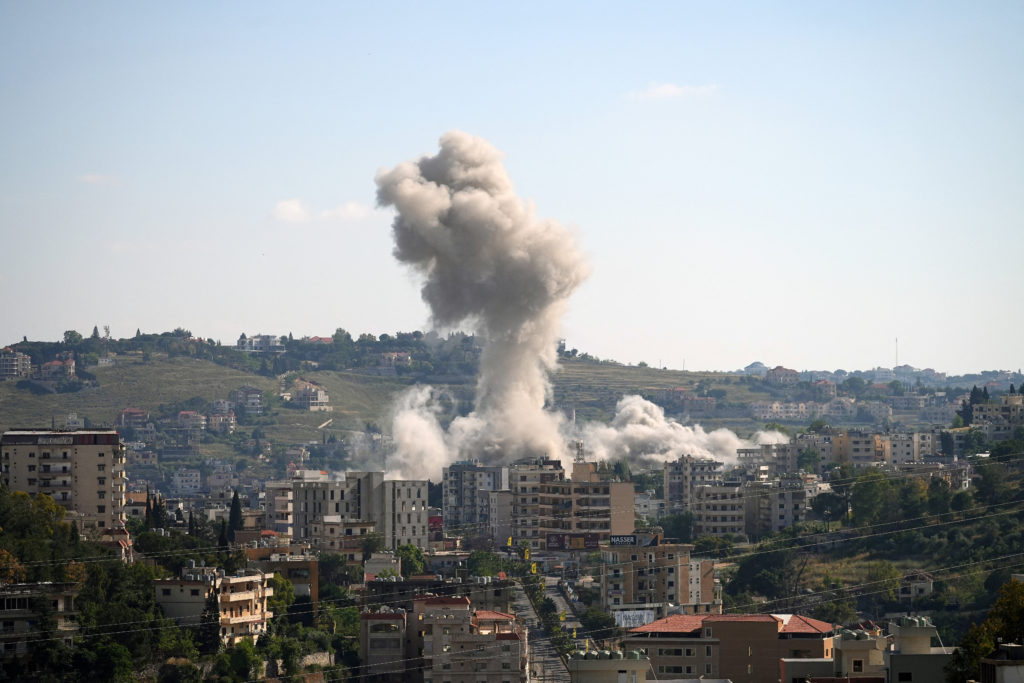
Israel has conducted military strikes in southern Beirut, while U.S. President Trump announced that Israel and Hezbollah may reduce fighting following mediated discussions. Netanyahu has ordered these strikes amid ongoing conflict.
- Israel's military has targeted southern suburbs of Beirut.
- Trump stated that Israel and Hezbollah have agreed to de-escalate hostilities.
- Netanyahu has ordered the strikes after significant military movements in Lebanon.
Why it matters
The developments could influence the ongoing conflict dynamics between Israel and Hezbollah, affecting regional stability.
↓ Congress can act on this
4 bills on this issue are moving right now — and the most active one is HJRES83: Providing for congressional disapproval of the proposed foreign military sale to Israel of certain defense articles and services..
HJRES83 · 119th Congress
Providing for congressional disapproval of the proposed foreign military sale to Israel of certain defense articles and services.
Where do you stand on this bill?
Takes about 60 seconds
About this bill
What HJRES83 actually does
This story is about Trump says Israel and Hezbollah have agreed to dial back fighting. This bill would If a U.S. arms transfer is viewed as affecting escalation dynamics on Israel’s northern front, this resolution is a direct congressional lev.
If passed, it would:
- Prohibit the specified proposed foreign military sale to Israel • Force a recorded congressional stance on that sale rather than leaving it solely to executive-branch action.
3 other bills moving on this issue
Take action on any of them individually.
This story is about Trump says Israel and Hezbollah have agreed to dial back fighting. This bill would If mediated talks are reducing Israel–Hezbollah fighting, Congress’s leverage over U.S. weapons transfers is one of the most direct tools th.
If passed, it would
- Prohibit selling/transferring/exporting specified defense articles/services (including BLU-109 bombs, JDAM assemblies • Allow transfers only if a law specifies purposes and Israel provides written assurances tied to those purposes and.
This story is about Trump says Israel and Hezbollah have agreed to dial back fighting. This bill would Hezbollah’s ability to sustain cross-border fighting is closely tied to outside funding and procurement; tightening enforceable sanctions on.
If passed, it would
- Require sanctions on foreign persons involved in logistical transactions for Iranian oil/gas/LNG/petrochemicals • Expand sanctions tools (including on supporting services like financing/insurance/shipping as described in bill text.
This story is about Trump says Israel and Hezbollah have agreed to dial back fighting. This bill would A dial-back along the Israel–Lebanon border turns heavily on Lebanon’s state capacity and Hezbollah’s influence; this bill would reshape (an.
If passed, it would
- Cut off (after a post-enactment delay) authorization/availability of federal funds for Lebanon’s armed forces unless • Require a recurring report to Congress on Hezbollah and Iranian influence throughout the Government of Lebanon.
Top coverage · 8 sources