
Humanoid robot sets half-marathon record in Beijing
A humanoid robot completed a half-marathon in Beijing, surpassing the previous human world record. The event featured both autonomous and remotely controlled robots. (sources: independent, pbs, fortune, aljazeera, ap)
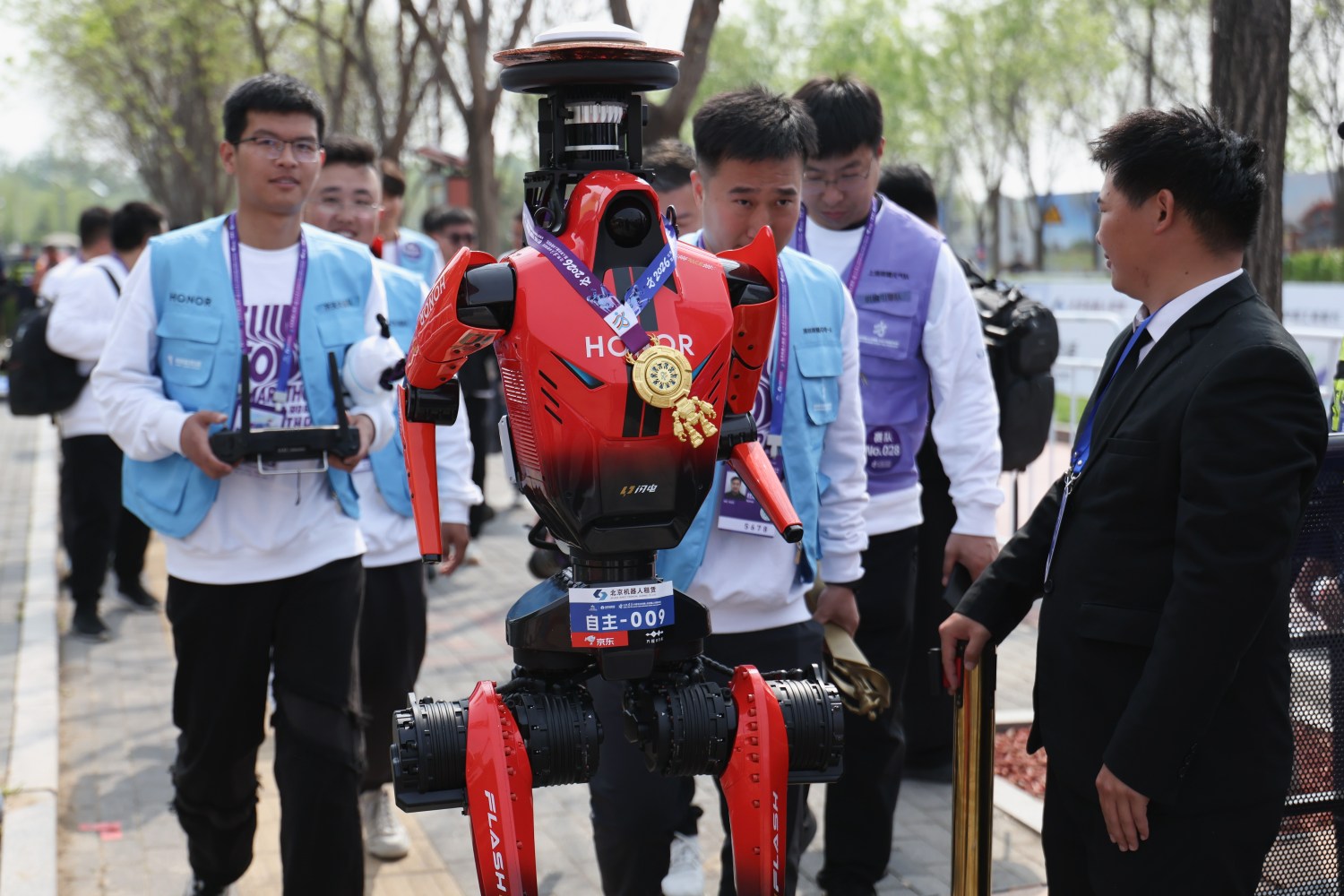
During a half-marathon in Beijing, a humanoid robot outperformed the human world record. Approximately 40% of the participating robots navigated the course autonomously.
- The humanoid robot won the half-marathon, beating the human world record.
- The race included both autonomous and remotely controlled robots.
- Humanoid robots competed alongside human runners in the event.
Why it matters
This event highlights advancements in robotics and their capabilities in competitive environments.
↓ Why this is on ModernAction
2 bills on this issue are moving right now — and the most active one is National Commission on Robotics Act.
HR7334 · 119th Congress
National Commission on Robotics Act
Where do you stand on this bill?
Takes about 60 seconds
About this bill
What HR7334 actually does
This story is about a robot beating the human half-marathon world record in a race. This bill would create a temporary federal commission led by the Secretary of Commerce to study robotics' effects on the economy, trade, and national security and report findings within two years.
If passed, it would:
- Creates a temporary federal commission on robotics within 30 days • Requires an interim report in 1 year and a final report in 2 years to Congress and the Pre.
1 other bill moving on this issue
Take action on any of them individually.
This story is about a robot breaking the human half-marathon world record in competition. The bill would require NIST to run pilot testbeds and develop measurement standards for evaluating AI systems, including robotics, and set up a federal testing structure for transparent evaluation.
If passed, it would
- Requires NIST pilot testbeds to develop AI measurement standards for robotics • Establishes a federal structure for transparent testing and evaluation practices.
Top coverage · 13 sources